

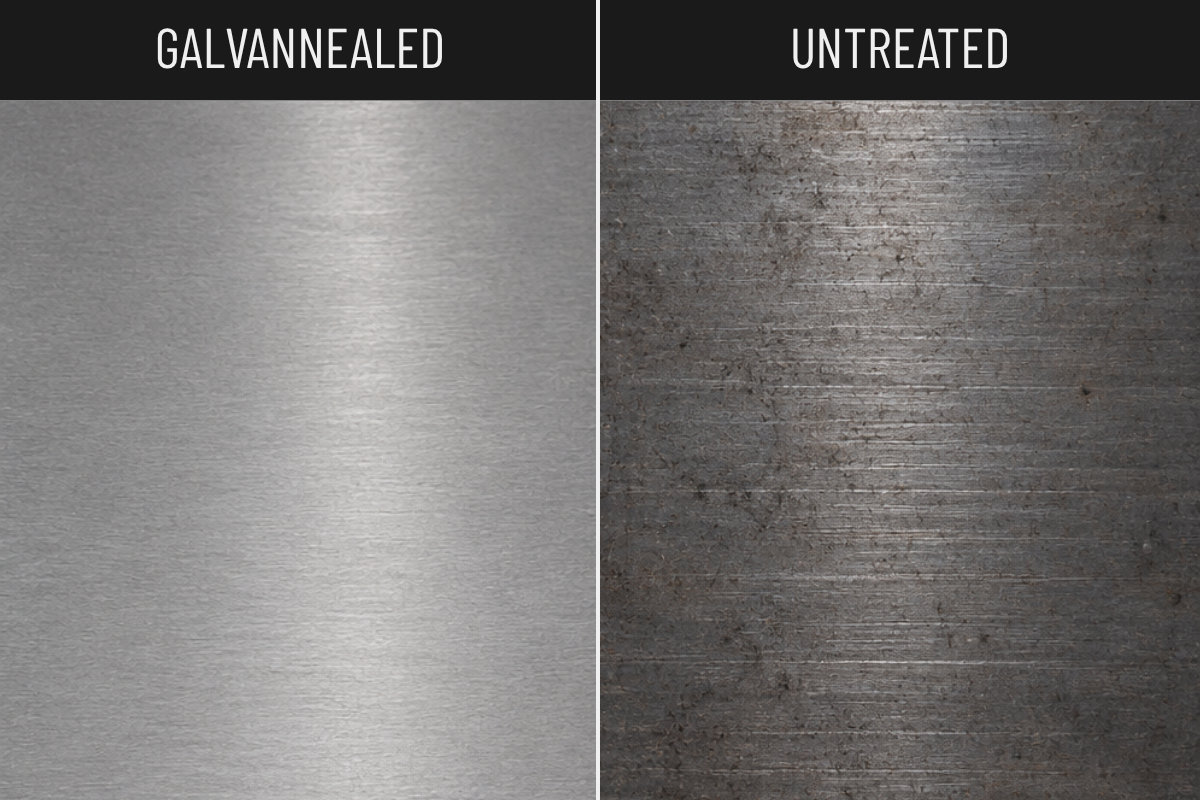
Two garage cabinets can both be made from cold-rolled steel and still start with very different levels of corrosion protection.
Steel gauge, powder coat, drawer capacity and cabinet dimensions are relatively easy to compare. One specification that is discussed much less often is the type of steel underneath the finish.
For garage cabinetry, an important distinction is between uncoated cold-rolled steel and galvannealed cold-rolled steel.
Quick Answer
Cold rolling describes how steel sheet is processed. It does not mean the steel has been protected against corrosion.
Uncoated cold-rolled steel relies on the cleaning, pretreatment and final coating applied later in manufacturing for corrosion protection.
Galvannealed cold-rolled steel already has a zinc-iron alloy coating before the cabinet is formed, welded and powder coated. This provides an additional layer of corrosion protection beneath the finished surface and creates a material particularly well suited to welded and painted products.
For a welded, powder-coated garage cabinet, the steel underneath the finish is therefore worth considering alongside gauge and construction.
What Is Cold-Rolled Steel?
Cold rolling is a manufacturing process used to produce steel sheet with tight dimensional tolerances and a smooth surface. It is widely used for products that need to be formed, bent and finished cleanly.
But cold-rolled does not automatically mean corrosion protected.
When a cabinet is described as being made from regular, plain or untreated cold-rolled steel, it generally means uncoated cold-rolled sheet steel that does not already have a zinc-based protective coating.
That steel can still be cleaned, pretreated, painted or powder coated successfully. Its corrosion protection, however, depends heavily on those later stages of manufacturing.
What Is Galvannealed Cold-Rolled Steel?
Galvannealed steel begins with steel sheet that receives a zinc-based coating and is then heat treated.
During that process, iron from the steel diffuses into the zinc coating, creating a zinc-iron alloy surface.
The resulting material is particularly useful for products that need to be:
Formed. Welded. Painted or powder coated.
Those are also the primary manufacturing processes used to turn sheet steel into a finished garage cabinet.
ArcelorMittal identifies corrosion protection, high surface quality and improved resistance spot-welding performance among the characteristics of galvannealed steel.
These properties are also why galvannealed steel is widely used in automotive manufacturing, where components must be formed, welded, painted and protected against corrosion.
Uncoated vs. Galvannealed Cold-Rolled Steel
| Uncoated Cold-Rolled Steel | Galvannealed Cold-Rolled Steel | |
|---|---|---|
| Base material | Cold-rolled steel | Cold-rolled steel |
| Zinc-based protection before finishing | No | Yes |
| Surface | Bare steel | Zinc-iron alloy coating |
| Suitable for forming | Yes | Yes |
| Suitable for welding | Yes | Particularly well suited |
| Suitable for powder coating | Yes, with proper preparation | Particularly well suited |
| Protection beneath the final finish | Relies on later pretreatment and coating | Zinc-iron coating adds another protective layer |
The key distinction is not whether one material is steel and the other is not.
Both are steel. The difference is what protection is already present before the cabinet is manufactured and finished.
Why the Steel Under the Powder Coat Matters
Powder coating creates an attractive and durable outer finish, but it describes the finish, not the material underneath it.
Both uncoated and galvannealed cold-rolled steel can be powder coated. Once installed, two finished cabinets may even look nearly identical.
The difference is in the complete protection system.
With uncoated steel, the condition of the material, cleaning process, pretreatment and final coating carry most of the responsibility for protecting the steel from moisture and oxygen.
With galvannealed steel, a zinc-iron coating is already present beneath those later layers.
That can become particularly relevant if the cabinet is scratched or chipped deeply enough to compromise the visible finish. Significant damage should still be repaired, but the underlying material determines what exists beneath the powder coat once that outer barrier has been penetrated.
This matters in garages because they are often more demanding environments than the interior of a home. Depending on climate and use, cabinets may be exposed to humidity, condensation, temperature changes, wet vehicles, melting snow, road salt and everyday impacts.
That does not mean a cabinet made from uncoated steel will automatically rust. Properly stored, cleaned, pretreated and coated uncoated steel can perform very well.
The difference is that galvannealed steel begins with an additional level of corrosion protection before the final finishing process even starts.
Why Proslat Uses Galvannealed Steel
At Proslat, galvannealed steel is the base material used across our steel cabinets and CORE toolboxes.
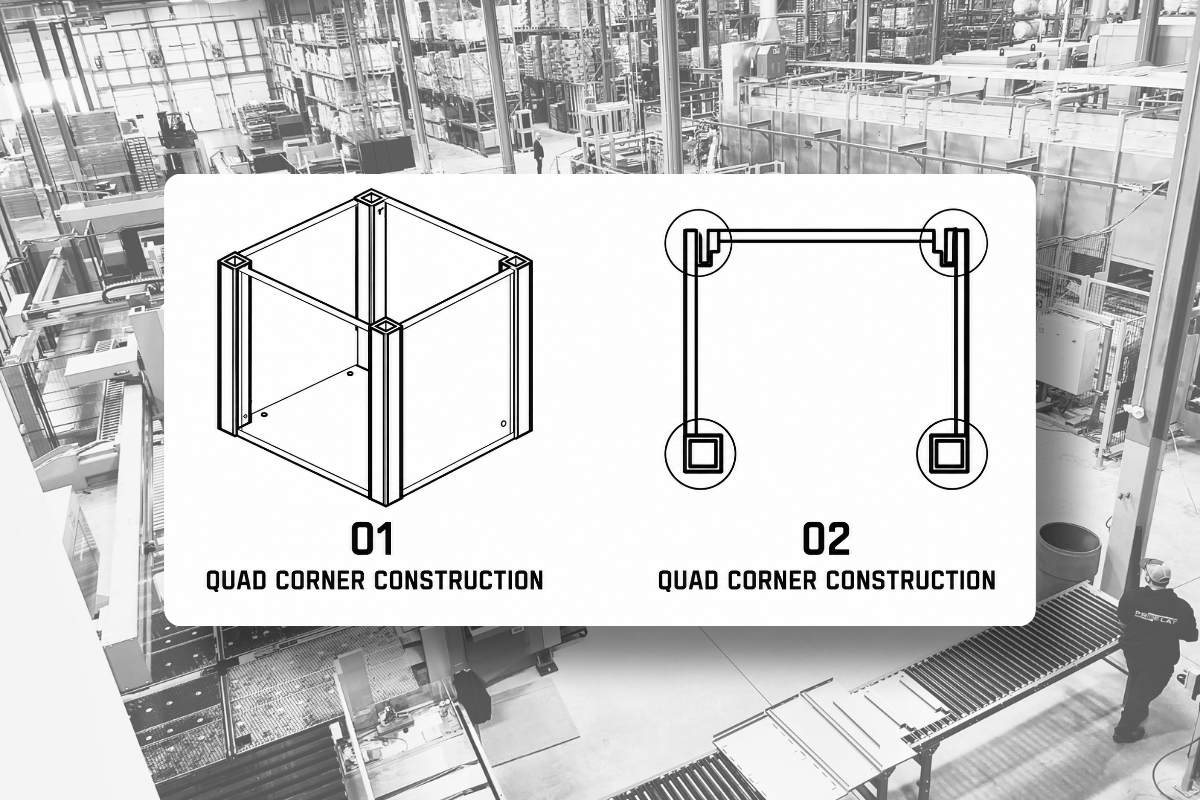
Our garage cabinets use 18-gauge galvannealed steel in the primary cabinet structure, combined with fully welded construction and Quad Core reinforced corners.
The steel is then prepared through a 5-step pretreatment process that includes zirconium treatment before the powder coat finish is applied.
The corrosion-protection system therefore does not rely on a single layer:
Galvannealed steel → 5-step pretreatment including zirconium → powder coat finish
Each stage serves a different purpose.
For us, the choice of galvannealed steel is not simply about adding another specification to a product sheet. It is about starting with a material suited to the way the cabinet is manufactured and the environment in which it will ultimately be used.
What Should You Ask When Comparing Garage Cabinets?
Steel gauge is useful, but gauge only tells you the thickness of the material.
When comparing cabinets, also ask:
What type of steel is being used?
Is it uncoated cold-rolled steel, or does it already have a protective coating such as galvannealed steel?
How is the steel prepared before finishing?
Cleaning and pretreatment affect how the finished coating bonds and performs.
What is underneath the powder coat?
Two cabinets with similar-looking finishes may use very different base materials and corrosion-protection systems.
How is the cabinet constructed?
Material choice should also be considered alongside welding, reinforcement, hardware and overall cabinet construction.
Looking at these specifications together provides a much better picture than evaluating a garage cabinet by steel gauge or powder coat alone.
The Bottom Line
Cold-rolled steel and galvannealed steel are not competing categories. Galvannealed steel can itself be cold rolled.
The meaningful distinction for garage cabinetry is whether the steel begins as an uncoated material or already has a zinc-iron protective coating beneath the later pretreatment and powder coat.
For welded, powder-coated garage cabinets, galvannealed steel provides an additional level of corrosion protection while remaining particularly well suited to forming, welding and finishing.
When comparing cabinets, don't judge the steel solely by the coating you can see.
Ask what is underneath it.
Frequently Asked Questions
Is cold-rolled steel the same as galvannealed steel?
No. Cold rolling describes how the steel sheet is processed. Galvannealing is an additional zinc-based coating and heat-treatment process. A steel sheet can therefore be both cold rolled and galvannealed.
Is powder-coated cold-rolled steel rust resistant?
Powder coating provides a protective barrier and can offer strong corrosion resistance when the steel has been properly prepared. With uncoated cold-rolled steel, however, there is no underlying zinc-based coating if that protective system is compromised.
What steel does Proslat use for its garage cabinets?
Proslat uses galvannealed steel, with 18-gauge galvannealed steel used in the primary cabinet structure. Before powder coating, the steel also goes through a 5-step pretreatment process that includes zirconium treatment.
Leave a comment
All comments are moderated before being published.
This site is protected by hCaptcha and the hCaptcha Privacy Policy and Terms of Service apply.